
CODE

What is OTT Broadcasting? Main Components & How It Works

Category

Blog

Author

John Burnett

Date

July 2, 2026
John Burnett
Digital Content Specialist

Lorem ipsum dolor sit amet, consectetur adipiscing elit. Suspendisse varius enim in eros elementum tristique.

Key Takeaways

  • OTT broadcasting delivers live or on-demand content over the internet. It bypasses traditional cable, satellite, and terrestrial distribution, allowing audiences to watch on connected TVs, mobiles, tablets, laptops, and streaming devices.
  • OTT in broadcasting gives media companies more control. Broadcasters can build branded apps, monetise content directly, measure engagement, and deliver personalised experiences across devices.
  • OTT delivery depends on several technical layers. Content must be ingested, encoded, packaged, protected, delivered through CDNs, and played back reliably on each device.
  • Most broadcasters should partner with an OTT platform. Building independently gives maximum control, but it also means managing infrastructure, apps, DRM, analytics, monetisation, and support in-house.

Broadcast viewing has moved beyond the living-room TV schedule.

OTT broadcasting allows broadcasters to deliver live channels, catch-up TV, and on-demand content over the internet, without relying only on cable, satellite, or terrestrial networks.

This guide explains what OTT is, how OTT TV works, the core platform components, and how broadcasters can decide whether to build independently or partner with an OTT platform.

What is OTT?

Over-the-top (OTT) delivers video or audio content over the internet, rather than through a traditional cable, satellite, or terrestrial TV provider.

The viewer only needs an internet connection and a compatible device. That device could be a smart TV, connected TV stick, mobile phone, tablet, laptop, games console, or set-top box.

OTT broadcasting can support live streams, linear channels, catch-up TV, FAST channels, and video on demand. For broadcasters, the key difference is control. OTT makes it possible to own the app experience, gather viewing data, test monetisation models, and reach audiences beyond a fixed TV schedule.

OTT Broadcasting Traditional Broadcasting
Delivered over the internet Delivered through cable, satellite, or terrestrial signals
Available across connected devices Mainly delivered through TV sets and set-top boxes
Supports live, catch-up, VOD, and FAST Usually built around linear schedules
Enables audience data and engagement tracking Measurement is usually less granular
Can support AVOD, SVOD, TVOD, FAST, and hybrid monetisation Usually relies on carriage fees, advertising, or subscriptions
Easier to update apps, content rails, promotions, and user journeys More dependent on fixed broadcast infrastructure

The current landscape of OTT broadcasting

OTT is no longer a side project for broadcasters. It is becoming part of the core broadcast strategy.

In the UK, Ofcom’s 2025 Media Nations report found that broadcaster online video viewing is growing, even though it has not fully offset the decline in linear TV viewing. The same report notes that YouTube viewing on TV sets continues to grow, and that broadcasters are trying to use that reach rather than treat it only as competition.

In the US, Nielsen reported that streaming represented 44.8% of total TV usage in May 2025, beating broadcast and cable combined for the first time. FAST services are also growing, with Pluto TV, The Roku Channel, and Tubi combining for 5.7% of total TV viewing in the same month.

For broadcasters, the direction is clear: audiences still value professionally produced content, but they expect to access it through streaming-style experiences. In fact, recent Simplestream projects show the same shift in practice.
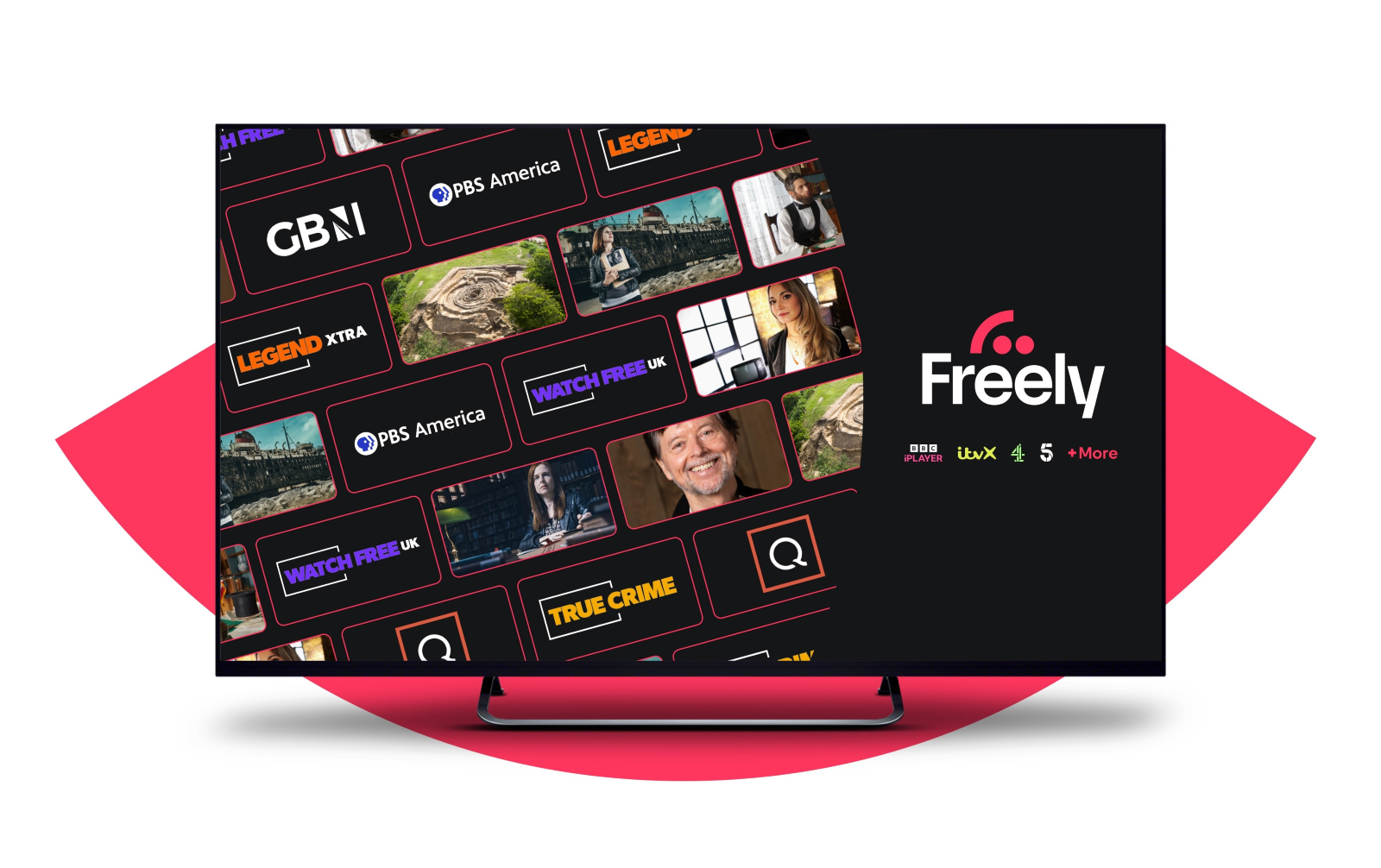
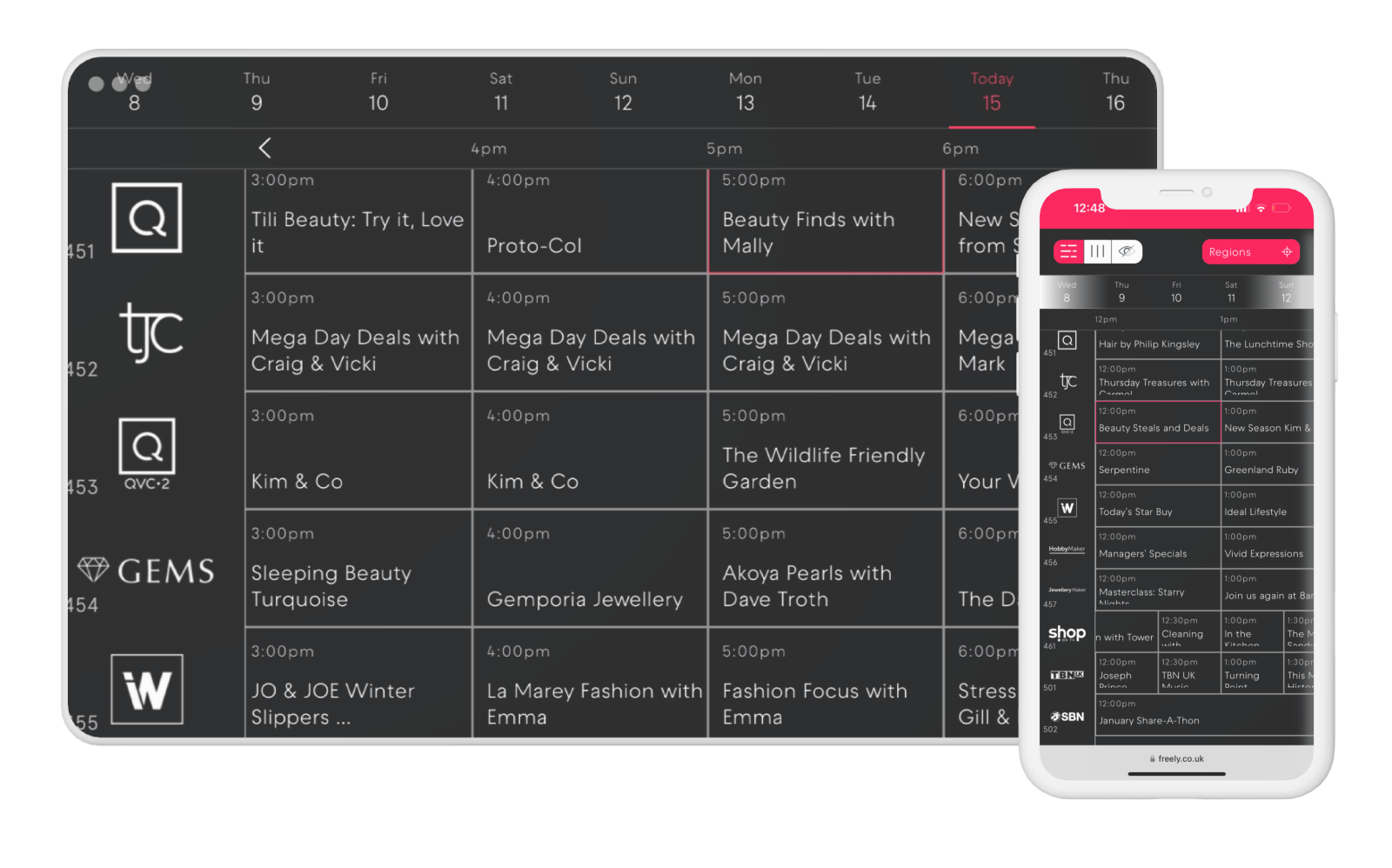
Below is how QVC, a longstanding partner of Simplestream, appears within the Freely Electronic Programme Guide (EPG).
Simplestream also supported Sony One’s expansion into Latin America, delivering premium content across Android, iOS, LG, Samsung, and web platforms with digital rights management (DRM), authentication, payments, video workflows, and real-time analytics.

For more context, read Simplestream’s guide to digital transformation for broadcasters using OTT services.

How does OTT delivery work?

OTT delivery turns broadcast or video content into internet-ready streams that can play reliably across devices.

The workflow usually starts with content acquisition. This can include live feeds, VOD files, satellite downlinks, terrestrial feeds, remote HLS, RTMP, SRT, or cloud-based inputs. Simplestream’s downlinking and encoding services support multiple live input sources and help prepare content for cross-platform distribution.

Next comes encoding and transcoding. The source video is converted into the right codecs, resolutions, bitrates, and formats for different devices and network conditions. This is especially important for VOD streaming, where files need to be normalised, packaged, protected, and made available across apps.

Then the content is packaged and delivered. Technologies like HLS and MPEG-DASH break video into small chunks and adapt quality based on the viewer’s bandwidth and device. CDNs then distribute those streams closer to viewers to reduce buffering and improve reliability. Check out Simplestream’s glossary pages on video processing and video streaming delivery to learn more.

Finally, the viewer watches through a player or app. Behind that experience, the OTT platform provider manages rights, authentication, advertising, analytics, payments, localisation, and app performance.

What are the main components of an OTT platform?

Setting up an OTT platform is complex because the viewer only sees the app, while the broadcaster must manage the full content, delivery, security, and monetisation stack behind it.

Component #1: Video CMS and content workflows

A video content management system is the operational centre of an OTT platform.

It helps teams upload, organise, tag, schedule, publish, and update content across apps and devices. For broadcasters, a CMS also needs to handle metadata, rights windows, live events, catch-up TV, highlights, clips, VOD libraries, and content rails.

Simplestream’s content management capabilities help teams manage Live & VOD workflows from a connected backend, instead of manually updating each destination.

Component #2: Video processing, delivery, and playback

OTT platforms need to prepare video for different devices, connection speeds, screen sizes, and operating systems.

This includes ingest, encoding, transcoding, adaptive bitrate streaming, packaging, CDN delivery, and player support. Without reliable video delivery, viewers may experience buffering, poor quality, or playback failure during peak demand.

Cost control is equally crucial. CDN and storage decisions can have a major impact on margins, especially for large VOD libraries and live events. Simplestream’s guide to making OTT services cost-effective across CDN and storage covers this in more detail.

Component #3: Monetisation and analytics

OTT broadcasters need a monetisation model that fits their content and audience.

Common monetisation models include AVOD, SVOD, TVOD, pay-per-view, FAST, sponsorships, and hybrid models. A strong platform should support the commercial model and provide analytics to understand what viewers watch, when they drop off, which devices they use, and how content performs.

For deeper monetisation planning, read more on the top four video monetisation platforms for streaming services.

Component #4: Rights, security, and access control

Premium content needs protection.

OTT platforms should support DRM, geo-blocking, authentication, entitlement rules, app-level access controls, secure payments, and content availability windows. These controls are especially important for sports, film, premium entertainment, kids’ content, and regional rights deals.

Simplestream’s rights and security services help broadcasters manage who can access content, where it can be viewed, and how it should be protected. For a deeper explanation, check out Simplestream’s guide to digital rights management.

How to set up an OTT broadcast: Independently vs. partnering with an OTT platform

Broadcasters have two main routes: build the OTT broadcast service independently, or partner with an OTT platform provider.

Building an OTT broadcast service independently

Building independently gives you maximum control over architecture, UX, apps, integrations, infrastructure, and roadmap.

But it also means your team is responsible for every layer: ott app development, CMS, video processing, encoding, CDN strategy, DRM, payments, analytics, QA, monitoring, app-store submissions, support, and ongoing updates. This can make sense for very large organisations with deep engineering teams and a long-term platform investment strategy.

For most broadcasters, the challenge is not launching one app. It is maintaining a high-quality OTT service across many devices while monetising content and keeping operational costs under control.

Partnering with an OTT platform

Partnering with an OTT platform reduces technical burden and launch risk.

Instead of building every layer internally, broadcasters can use established products, integrations, delivery workflows, app frameworks, analytics, and monetisation tools. This is often the more practical route for teams that need speed, reliability, and specialist OTT support.

Simplestream’s OTT platform helps broadcasters and content owners launch Live & VOD experiences across devices, with support for apps, Media Manager, monetisation, analytics, rights, security, and video delivery.

For a vendor comparison, read this guide on the top four OTT platform providers. You can also check out our list of the best OTT app builders if you're looking to live on mobile or TV.

Want to launch or improve an OTT broadcast service without building every layer in-house? Talk to Simplestream about your platform requirements.

Get your OTT platform to millions of screens with Simplestream

OTT broadcasting gives broadcasters a way to reach viewers wherever they watch: live, on demand, at home, or on the move.

But the opportunity comes with operational complexity. To deliver a reliable OTT service, broadcasters need content workflows, app experiences, encoding, CDN delivery, monetisation, analytics, rights controls, and support across devices.

Simplestream helps broadcasters, content owners, sports rightsholders, and media companies turn that complexity into a scalable OTT platform. From live streaming and catch-up to VOD, apps, monetisation, and delivery, Simplestream supports the full path from content to viewer.

Book a demo to see how Simplestream can help you launch, scale, or optimise your OTT broadcast service.

FAQs

What's the difference between OTT and IPTV?

OTT uses the open internet. IPTV usually uses a managed private network controlled by a telecoms or pay-TV provider.

How do OTT broadcasters make money?

OTT broadcasters make money through advertising, subscriptions, pay-per-view, rentals, sponsorships, FAST channels, syndication, or hybrid monetisation models.

Is OTT the same as streaming?

Mostly, yes. OTT is a type of streaming that delivers content over the internet without traditional cable or satellite distribution.

How does OTT TV work?

OTT TV sends encoded video over the internet to apps or players, usually through adaptive streaming and CDN delivery.

Is OTT only for video on demand?

No. OTT can support live channels, live events, catch-up TV, FAST channels, VOD libraries, and hybrid broadcast experiences.
Table of Contents

What is OTT Broadcasting? Main Components & How It Works

Key Takeaways

  • OTT broadcasting delivers live or on-demand content over the internet. It bypasses traditional cable, satellite, and terrestrial distribution, allowing audiences to watch on connected TVs, mobiles, tablets, laptops, and streaming devices.
  • OTT in broadcasting gives media companies more control. Broadcasters can build branded apps, monetise content directly, measure engagement, and deliver personalised experiences across devices.
  • OTT delivery depends on several technical layers. Content must be ingested, encoded, packaged, protected, delivered through CDNs, and played back reliably on each device.
  • Most broadcasters should partner with an OTT platform. Building independently gives maximum control, but it also means managing infrastructure, apps, DRM, analytics, monetisation, and support in-house.

Broadcast viewing has moved beyond the living-room TV schedule.

OTT broadcasting allows broadcasters to deliver live channels, catch-up TV, and on-demand content over the internet, without relying only on cable, satellite, or terrestrial networks.

This guide explains what OTT is, how OTT TV works, the core platform components, and how broadcasters can decide whether to build independently or partner with an OTT platform.

What is OTT?

Over-the-top (OTT) delivers video or audio content over the internet, rather than through a traditional cable, satellite, or terrestrial TV provider.

The viewer only needs an internet connection and a compatible device. That device could be a smart TV, connected TV stick, mobile phone, tablet, laptop, games console, or set-top box.

OTT broadcasting can support live streams, linear channels, catch-up TV, FAST channels, and video on demand. For broadcasters, the key difference is control. OTT makes it possible to own the app experience, gather viewing data, test monetisation models, and reach audiences beyond a fixed TV schedule.

OTT Broadcasting Traditional Broadcasting
Delivered over the internet Delivered through cable, satellite, or terrestrial signals
Available across connected devices Mainly delivered through TV sets and set-top boxes
Supports live, catch-up, VOD, and FAST Usually built around linear schedules
Enables audience data and engagement tracking Measurement is usually less granular
Can support AVOD, SVOD, TVOD, FAST, and hybrid monetisation Usually relies on carriage fees, advertising, or subscriptions
Easier to update apps, content rails, promotions, and user journeys More dependent on fixed broadcast infrastructure

The current landscape of OTT broadcasting

OTT is no longer a side project for broadcasters. It is becoming part of the core broadcast strategy.

In the UK, Ofcom’s 2025 Media Nations report found that broadcaster online video viewing is growing, even though it has not fully offset the decline in linear TV viewing. The same report notes that YouTube viewing on TV sets continues to grow, and that broadcasters are trying to use that reach rather than treat it only as competition.

In the US, Nielsen reported that streaming represented 44.8% of total TV usage in May 2025, beating broadcast and cable combined for the first time. FAST services are also growing, with Pluto TV, The Roku Channel, and Tubi combining for 5.7% of total TV viewing in the same month.

For broadcasters, the direction is clear: audiences still value professionally produced content, but they expect to access it through streaming-style experiences. In fact, recent Simplestream projects show the same shift in practice.

Below is how QVC, a longstanding partner of Simplestream, appears within the Freely Electronic Programme Guide (EPG).

Simplestream also supported Sony One’s expansion into Latin America, delivering premium content across Android, iOS, LG, Samsung, and web platforms with digital rights management (DRM), authentication, payments, video workflows, and real-time analytics.

For more context, read Simplestream’s guide to digital transformation for broadcasters using OTT services.

How does OTT delivery work?

OTT delivery turns broadcast or video content into internet-ready streams that can play reliably across devices.

The workflow usually starts with content acquisition. This can include live feeds, VOD files, satellite downlinks, terrestrial feeds, remote HLS, RTMP, SRT, or cloud-based inputs. Simplestream’s downlinking and encoding services support multiple live input sources and help prepare content for cross-platform distribution.

Next comes encoding and transcoding. The source video is converted into the right codecs, resolutions, bitrates, and formats for different devices and network conditions. This is especially important for VOD streaming, where files need to be normalised, packaged, protected, and made available across apps.

Then the content is packaged and delivered. Technologies like HLS and MPEG-DASH break video into small chunks and adapt quality based on the viewer’s bandwidth and device. CDNs then distribute those streams closer to viewers to reduce buffering and improve reliability. Check out Simplestream’s glossary pages on video processing and video streaming delivery to learn more.

Finally, the viewer watches through a player or app. Behind that experience, the OTT platform provider manages rights, authentication, advertising, analytics, payments, localisation, and app performance.

What are the main components of an OTT platform?

Setting up an OTT platform is complex because the viewer only sees the app, while the broadcaster must manage the full content, delivery, security, and monetisation stack behind it.

Component #1: Video CMS and content workflows

A video content management system is the operational centre of an OTT platform.

It helps teams upload, organise, tag, schedule, publish, and update content across apps and devices. For broadcasters, a CMS also needs to handle metadata, rights windows, live events, catch-up TV, highlights, clips, VOD libraries, and content rails.

Simplestream’s content management capabilities help teams manage Live & VOD workflows from a connected backend, instead of manually updating each destination.

Component #2: Video processing, delivery, and playback

OTT platforms need to prepare video for different devices, connection speeds, screen sizes, and operating systems.

This includes ingest, encoding, transcoding, adaptive bitrate streaming, packaging, CDN delivery, and player support. Without reliable video delivery, viewers may experience buffering, poor quality, or playback failure during peak demand.

Cost control is equally crucial. CDN and storage decisions can have a major impact on margins, especially for large VOD libraries and live events. Simplestream’s guide to making OTT services cost-effective across CDN and storage covers this in more detail.

Component #3: Monetisation and analytics

OTT broadcasters need a monetisation model that fits their content and audience.

Common monetisation models include AVOD, SVOD, TVOD, pay-per-view, FAST, sponsorships, and hybrid models. A strong platform should support the commercial model and provide analytics to understand what viewers watch, when they drop off, which devices they use, and how content performs.

For deeper monetisation planning, read more on the top four video monetisation platforms for streaming services.

Component #4: Rights, security, and access control

Premium content needs protection.

OTT platforms should support DRM, geo-blocking, authentication, entitlement rules, app-level access controls, secure payments, and content availability windows. These controls are especially important for sports, film, premium entertainment, kids’ content, and regional rights deals.

Simplestream’s rights and security services help broadcasters manage who can access content, where it can be viewed, and how it should be protected. For a deeper explanation, check out Simplestream’s guide to digital rights management.

How to set up an OTT broadcast: Independently vs. partnering with an OTT platform

Broadcasters have two main routes: build the OTT broadcast service independently, or partner with an OTT platform provider.

Building an OTT broadcast service independently

Building independently gives you maximum control over architecture, UX, apps, integrations, infrastructure, and roadmap.

But it also means your team is responsible for every layer: ott app development, CMS, video processing, encoding, CDN strategy, DRM, payments, analytics, QA, monitoring, app-store submissions, support, and ongoing updates. This can make sense for very large organisations with deep engineering teams and a long-term platform investment strategy.

For most broadcasters, the challenge is not launching one app. It is maintaining a high-quality OTT service across many devices while monetising content and keeping operational costs under control.

Partnering with an OTT platform

Partnering with an OTT platform reduces technical burden and launch risk.

Instead of building every layer internally, broadcasters can use established products, integrations, delivery workflows, app frameworks, analytics, and monetisation tools. This is often the more practical route for teams that need speed, reliability, and specialist OTT support.

Simplestream’s OTT platform helps broadcasters and content owners launch Live & VOD experiences across devices, with support for apps, Media Manager, monetisation, analytics, rights, security, and video delivery.

For a vendor comparison, read this guide on the top four OTT platform providers. You can also check out our list of the best OTT app builders if you're looking to live on mobile or TV.

Want to launch or improve an OTT broadcast service without building every layer in-house? Talk to Simplestream about your platform requirements.

Get your OTT platform to millions of screens with Simplestream

OTT broadcasting gives broadcasters a way to reach viewers wherever they watch: live, on demand, at home, or on the move.

But the opportunity comes with operational complexity. To deliver a reliable OTT service, broadcasters need content workflows, app experiences, encoding, CDN delivery, monetisation, analytics, rights controls, and support across devices.

Simplestream helps broadcasters, content owners, sports rightsholders, and media companies turn that complexity into a scalable OTT platform. From live streaming and catch-up to VOD, apps, monetisation, and delivery, Simplestream supports the full path from content to viewer.

Book a demo to see how Simplestream can help you launch, scale, or optimise your OTT broadcast service.

FAQs

What's the difference between OTT and IPTV?

OTT uses the open internet. IPTV usually uses a managed private network controlled by a telecoms or pay-TV provider.

How do OTT broadcasters make money?

OTT broadcasters make money through advertising, subscriptions, pay-per-view, rentals, sponsorships, FAST channels, syndication, or hybrid monetisation models.

Is OTT the same as streaming?

Mostly, yes. OTT is a type of streaming that delivers content over the internet without traditional cable or satellite distribution.

How does OTT TV work?

OTT TV sends encoded video over the internet to apps or players, usually through adaptive streaming and CDN delivery.

Is OTT only for video on demand?

No. OTT can support live channels, live events, catch-up TV, FAST channels, VOD libraries, and hybrid broadcast experiences.