Blog
September 24, 2026
OTT advertising has grown in recent years, and it’s now a core part of modern media strategy. And the numbers back it up:
Among surveyed advertisers in 2025, average annual ad spend reached $127M, and 70% plan to increase their CTV/OTT budgets by an average of 17% in 2026. All these are driven by OTT’s ability to reach engaged audiences and deliver measurable results, which is also why you’re here.
But as investment grows, there’s also a likelihood of complexity—think fragmented platforms, multiple ad partners, and evolving measurement standards. These bottlenecks make scaling campaigns difficult.
This article breaks it all down. You’ll learn:
By the end, you’ll easily make smarter decisions and build a more effective OTT strategy.
OTT (over-the-top) advertising refers to ads delivered through internet-based streaming platforms rather than traditional broadcast or cable TV. These ads appear while users watch on-demand or live content on devices like smart TVs, mobile apps, and connected TV platforms.
These examples add more context:
Unlike linear TV, OTT ads are data-driven and targeted. This means advertisers can reach specific audiences based on location or viewing habits. And that makes campaigns more relevant.
But to what end?
For broadcasters, content owners, and advertisers, OTT advertising combines TV-scale reach with digital precision. That means improved engagement and monetised streaming content.
In five steps:
Because of these detailed steps, advertisers reach targeted audiences across multiple devices with greater precision. This also allows campaigns to be optimised continuously, improving targeting and reducing wasted spend, compared to traditional TV advertising.
Also read: Five ways to acquire new customers in OTT
Not all streaming TV ads work the same way. The key difference lies in how ads are targeted and measured across platforms.
We summarised it below:
In practice, OTT advertising is the umbrella category that includes formats like CTV, VOD, and FAST. What sets it apart is its ability to combine TV-like viewing with digital targeting and measurement.
For example, a FAST channel may deliver linear-style ads, but those ads are still powered by OTT infrastructure. In other words, they can be targeted and optimised in ways traditional TV cannot.
While there are different types, these five are common:
Pre-roll ads play before the main content starts. They are among the most widely used OTT ad formats because they capture viewers’ attention early, when engagement is highest. Since users must watch them before accessing content, completion rates are typically strong.
Pre-roll ads are perfect for brand awareness and short-form messaging, especially in on-demand and live streaming. In these environments, viewers expect a brief delay before playback.
Mid-roll ads appear during content playback, usually at natural breaks such as scene transitions or pauses in live events. They are common in longer content, such as sports or live broadcasts. Because viewers are already engaged, mid-roll ads often deliver strong completion and recall rates. However, poor placement can disrupt the viewing experience, so you need to manage timing and frequency.
Post-roll ads surface after the content ends. While they tend to have lower completion rates compared to pre- and mid-roll ads, they can still be effective for highly engaged audiences who stay until the end. These ads are often used for follow-up messaging, promotions, or calls to action, especially when viewers have just completed a piece of content and are more receptive to next steps.
Note: the next two are delivery methods.
Server-side ad insertion (SSAI) embeds ads directly into the video stream before it reaches the viewer. This creates a seamless playback experience with fewer interruptions or buffering issues. SSAI also makes ads harder to block, improving delivery rates for advertisers. It is widely used in FAST channels and live streaming, where maintaining a smooth, TV-like experience is critical for viewer retention.
Client-side ad insertion (CSAI) delivers ads directly through the video player on the viewer’s device. When an ad break occurs, the content pauses, the ad is loaded, and then playback resumes. This approach supports interactive formats like clickable ads and real-time tracking. However, because ads are requested on the client side, CSAI can be affected by ad blockers or slower load times, which may impact the viewing experience if not optimised.
The best format depends on two things: your content type and your goal.
Further reading: SSAI vs CSAI: Which is best?
Bottom line: Use a mix of formats, but start with one to two core options. Test performance, then scale what works. This is how enterprise OTT platforms grow ad revenue without hurting user experience.
The key ones include:
OTT advertising helps you target viewers based on device and viewing behaviour. Instead of broadcasting to a broad audience, you deliver ads to specific segments. In the long run, this improves relevance and reduces wasted spend across campaigns.
Unlike traditional TV, OTT advertising provides clear performance data, such as completion rates and engagement. With those, you'll understand what’s working and optimise campaigns in real time for better ROI.
OTT ads reach audiences across smart TVs, mobile devices, and web platforms. For example, platforms like Simplestream enable content delivery across multiple devices. This helps you maintain consistent reach wherever viewers are watching.
OTT viewers are typically more engaged because they choose what to watch. This leads to better ad recall and completion rates. Ultimately, these help your monetisation goals.
OTT supports multiple monetisation models, including AVOD, SVOD, and FAST. With that, you can combine subscription revenue with advertising to maximise the value of your content libraries and audience reach.
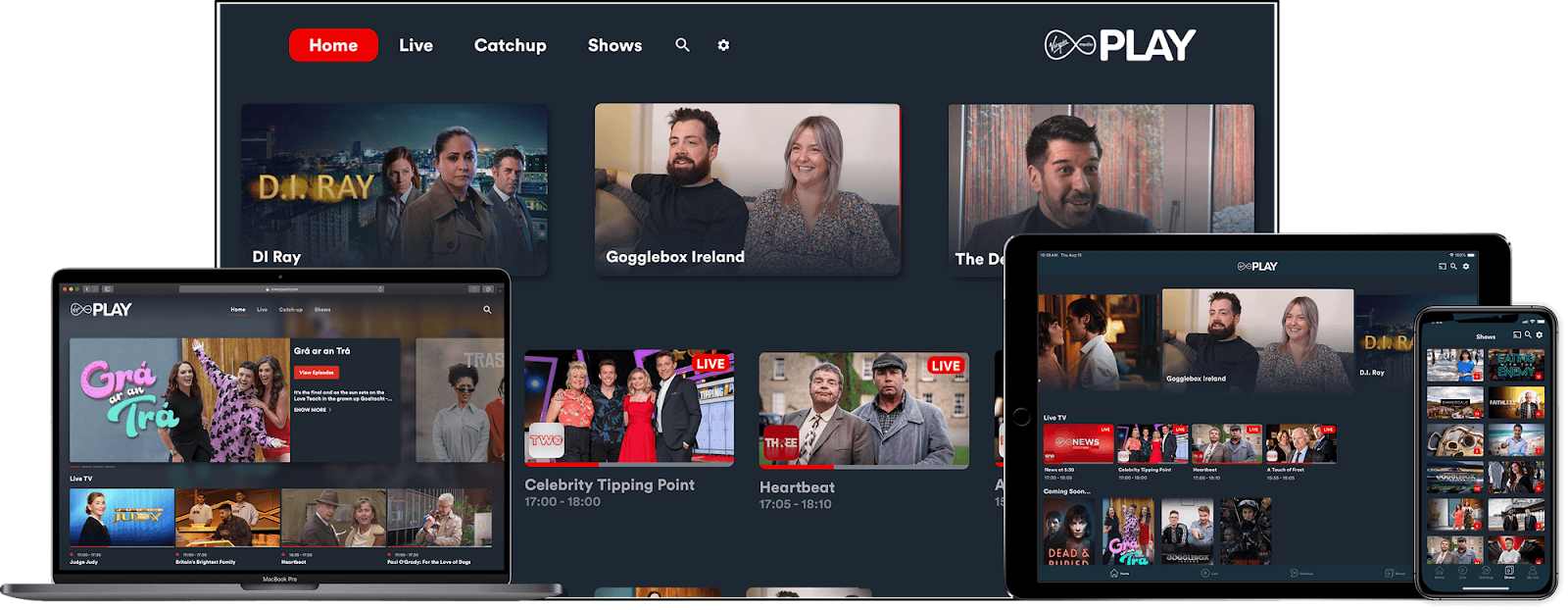
With enterprise OTT platforms, you can scale campaigns across regions and audiences. For example, large broadcasters (e.g., Virgin Media TV) using OTT platforms, like Simplestream, deliver live, on-demand, and FAST content with integrated advertising workflows, ensuring reliable performance as viewership grows.
Read more: How ad-tech and localisation are shaping the future of local broadcast
OTT advertising, while an upgrade over conventional TV advertising, can be challenging to scale. Below are some of the top operational and technical challenges to expect.
OTT campaigns often run across multiple platforms and inventory providers. This means working with several ad partners to reach the right audience. While the upside is reaching the right audience, the downside is fragmented workflows with disconnected data and inconsistent reporting.
Delivering ads seamlessly across devices requires choosing between CSAI and SSAI, each with trade-offs. But the core pain lies in execution. Poor implementation leads to buffering or ad blocking. Either way, that’d hurt both viewer experience and ad revenue, especially during live events or FAST streaming.
OTT advertising generates large volumes of data, but turning that into clear insights is not always straightforward. Different attribution models and reporting tools make it difficult to compare performance across platforms. As a result, teams struggle to identify what’s working and where to optimise.
Once your audiences grow, the demands on your streaming infrastructure will follow suit. But there’s a challenge: delivering high-quality video with integrated ads across devices and regions requires reliable distribution and monetisation workflows. Without all that, you risk buffering, downtime, and lost ad revenue during peak demand.
All of these challenges are what enterprise OTT platforms like Simplestream are designed to solve. Simplestream provides:
For example, Virgin Media Television uses Simplestream to unify live TV, catch-up, and on-demand content across devices while supporting ad-supported monetisation at scale. This helps them deliver a seamless viewing experience and maximise ad performance.
Request a demo to see how Simplestream simplifies multi-platform OTT delivery!
First, know the metrics worth measuring:
In Simplestream, completion rates are tracked directly within your Media Manager and analytics integrations. You can see how ads perform across live streams, VOD, and FAST channels. Then you will easily identify which formats and placements keep viewers engaged and where drop-offs occur.
For interactive or clickable ads, Simplestream integrates with third-party ad and analytics tools to track CTR in real time. This helps you measure how viewers respond to campaigns and optimise creatives based on actual engagement data.
Simplestream’s monetisation workflows support AVOD, FAST, and hybrid models, allowing you to track CPM and eCPM across different inventory types. By comparing performance across channels and regions, you can identify which content and ad placements generate the highest revenue.
Using analytics integrations, Simplestream helps you track viewer behaviour around ad breaks, such as drop-offs during mid-roll ads or session length across devices. This insight helps balance ad frequency with user experience, especially for live events and long-form content.
Simplestream helps you combine ad revenue with subscription or hybrid models to measure revenue per user (ARPU). And with the unified reporting across platforms, you can evaluate how effectively your OTT service is monetising audiences and scale what works.
Beyond the metrics, you need a single view of performance across content, devices, and monetisation workflows. More importantly, you need a simplified infrastructure behind your ads. Simplestream helps with both.
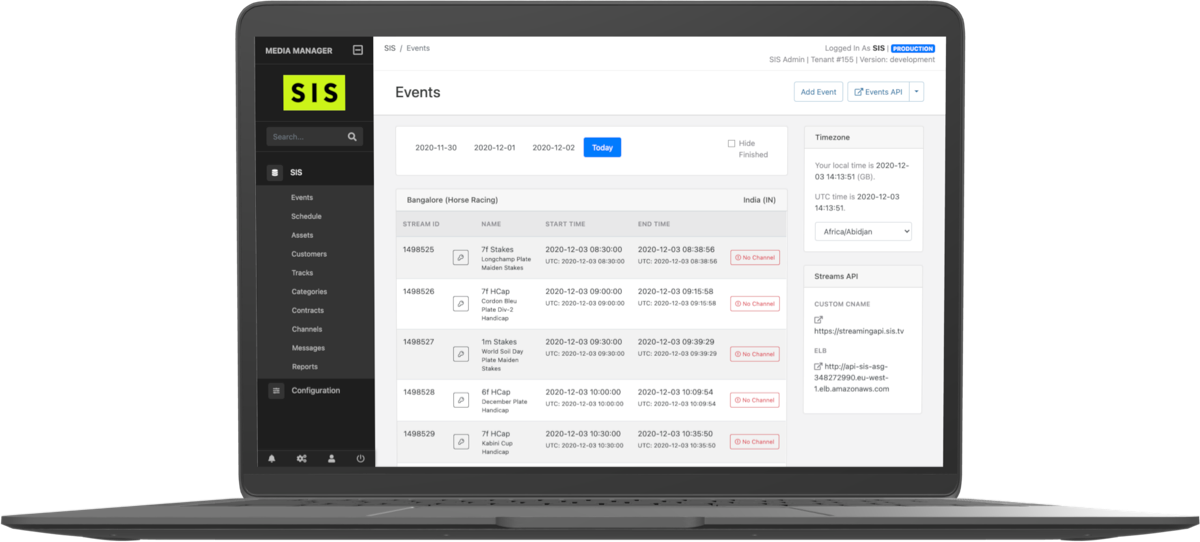
SIS used Simplestream to deliver hundreds of live streams globally with flexible syndication and reporting. This allowed them to onboard new partners quickly while maintaining control over content access and performance tracking.
Achieve similar results with Simplestream!
OTT advertising offers clear advantages over traditional TV ads. However, its success depends on how well your platform handles delivery, monetisation, and scale.
Simplestream brings the three together in a single, end-to-end OTT platform.
So, whether you’re scaling live events, expanding into FAST, or improving ad performance, Simplestream is the go-to OTT platform. It helps without compromising viewers’ experience.
Ready to turn OTT into a scalable revenue channel? Book a demo today!