Blog
September 1, 2026
A live broadcast never fails quietly. When the stream buffers, the payment flow breaks, the app crashes, or the replay is not ready, viewers blame the brand on screen.
Having a reliable live streaming broadcasting platform under the hood protects the viewer experience from these technical snags, and your brand from the potential finger-pointing.
The best platform depends on your priorities: broadcast-grade OTT delivery, pay-per-view access, venue reliability, social multistreaming, or developer-controlled streaming infrastructure.
This guide compares five live streaming platforms by use case, features, pricing, strengths, limitations, and best-fit customer.
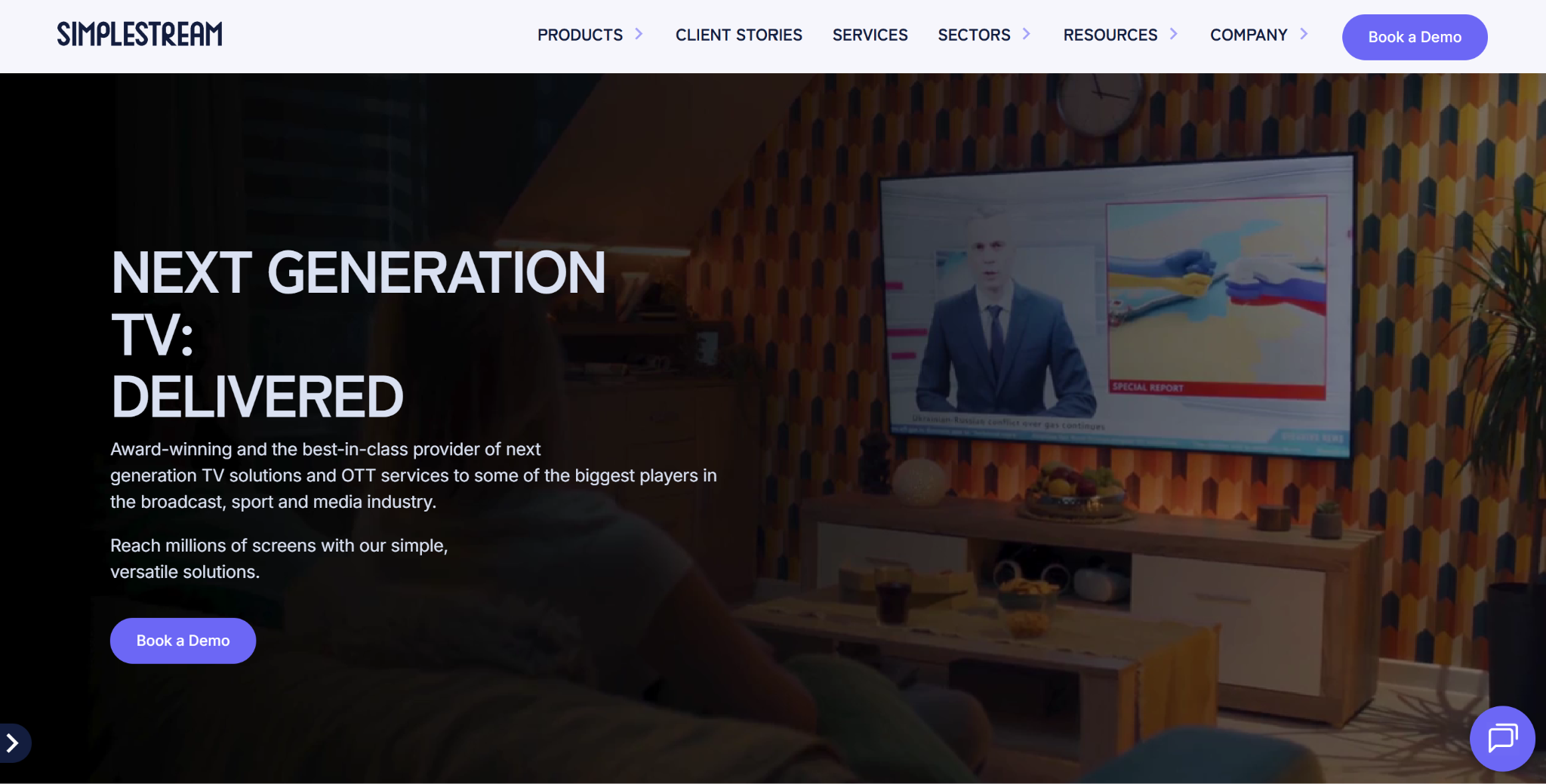
Simplestream is a live streaming broadcasting platform for broadcasters, sports rightsholders, content owners, news organisations, teleshopping brands, and enterprise media teams.
The platform supports live event workflows, live channel delivery, multi-device OTT apps, Live2VOD, VOD2Live, localisation, monetisation, authentication, payments, and Media Manager operations. It is built for teams that need to deliver live content professionally across web, mobile, connected TV, smart TV, and partner platforms.
Simplestream’s live streaming features are strongest where live delivery, OTT workflows, and post-live content value need to work together.
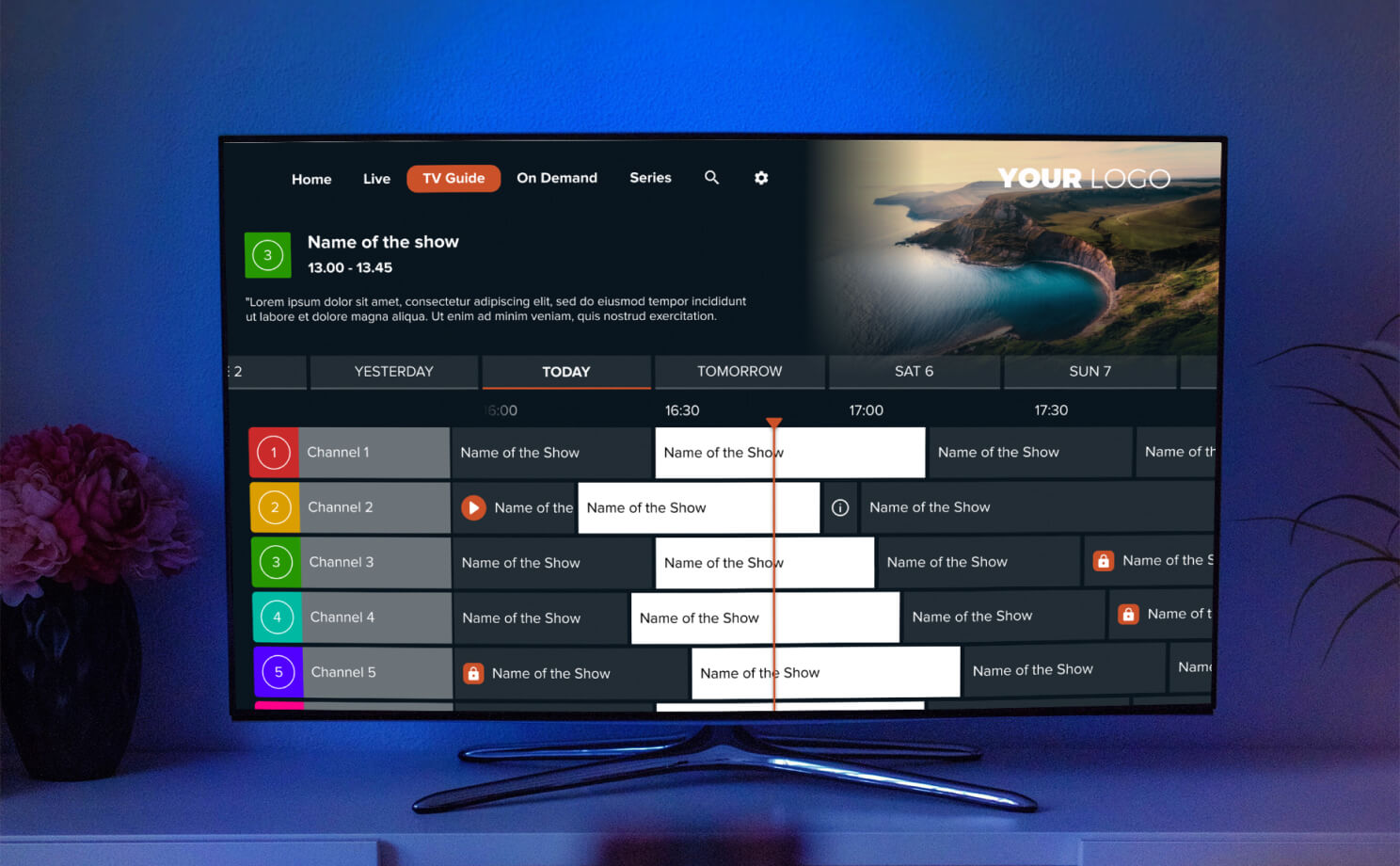
Simplestream can ingest live streams from multiple sources, including RTMP, HLS, SRT, satellite downlinks, and terrestrial downlinks from its London data centre.
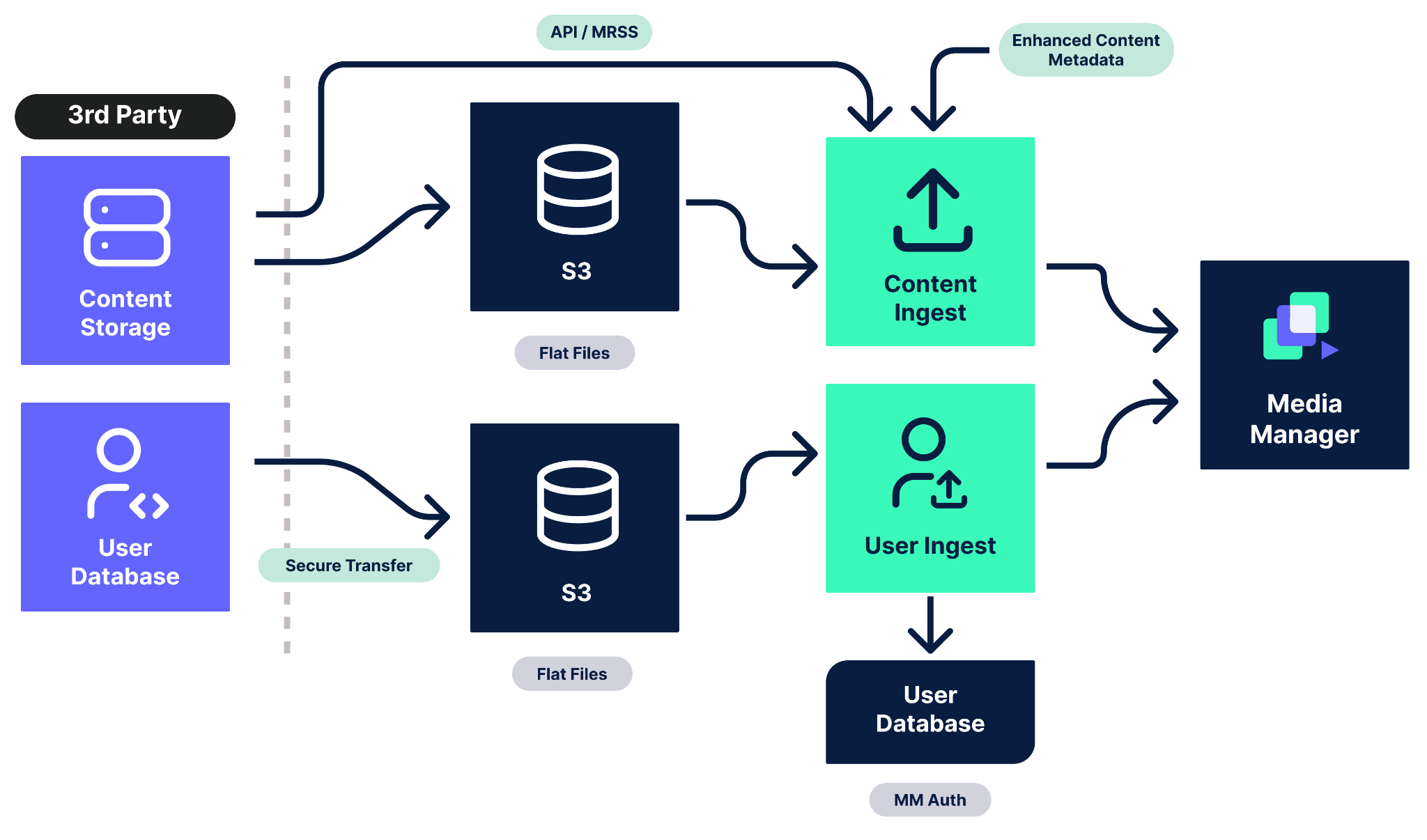

This gives broadcasters and rights holders flexibility when a live source is managed internally, handled by a production partner, or coming from an external broadcast feed. The platform is designed to move that source into a managed OTT workflow, then deliver it across apps, connected devices, and audience destinations.
Simplestream’s live streaming services are especially relevant for live channels, sports, events, news, teleshopping, and broadcast services where reliability matters.
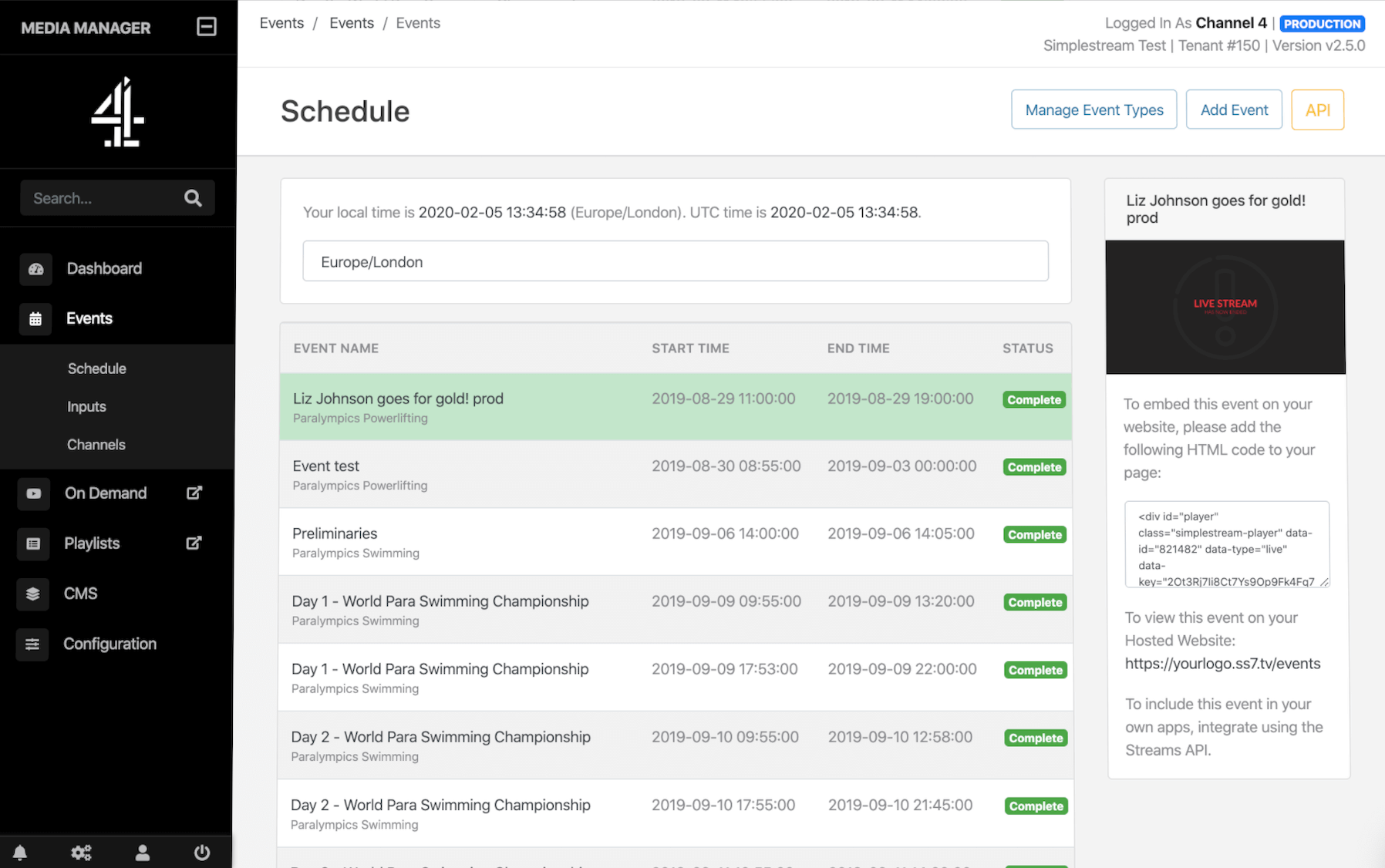
Simplestream’s Live Events solution helps teams schedule events, manage event configurations from one dashboard, edit streams on a per-channel basis, define blackouts, geo-locate content, and syndicate live content to affiliate partners or social channels.
The platform also supports cloud-based streaming workflows, redundancy, auto-failover, multi-DRM, optional low-latency streaming, CDN switching, and server-side ad replacement.
For enterprise broadcasting, this means the live event is not treated as a one-off stream. It becomes part of a wider OTT operation with user access, monetisation, rights, analytics, and platform delivery.
Simplestream’s Live2VOD workflow helps teams turn live broadcasts into on-demand assets after the event.
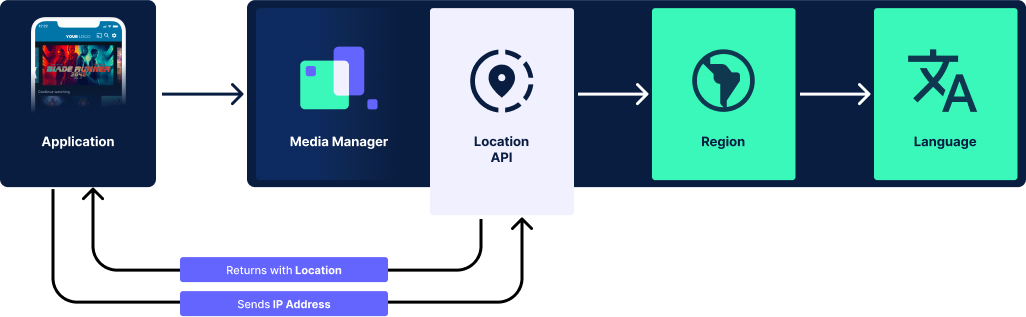
This is valuable for sports highlights, catch-up TV, news clips, event replays, and teleshopping segments where the value of the content continues after the live broadcast. Simplestream also supports languages and localisation, so broadcasters can package content for different audiences, territories, and language requirements.
For live-first OTT teams, these workflows help increase the commercial value of every live stream.
Simplestream uses custom pricing because live streaming deployments vary by audience scale, device coverage, event volume, source type, latency needs, monetisation, rights, localisation, integrations, and support requirements.
Renowned broadcast companies count on Simplestream for its reliable and scalable live streaming platform.
Check out more client stories.
Need a broadcast-grade live streaming platform for OTT apps, events, and connected devices? Talk to Simplestream about your live streaming requirements.
Dacast is a professional live streaming video platform for teams that need hosted live streams, secure embedding, VOD, pay-per-view, subscriptions, ads, analytics, and a white-label HTML5 player.
It is a strong fit for paid events, education, houses of worship, conferences, performances, and small broadcasters that need professional live delivery without a full OTT app platform.
Dacast’s paywall supports pay-per-view and subscription access for live and hosted video. It also supports group pricing, promo codes, viewing windows, credit card payments, PayPal, and payments in more than 140 currencies. This makes Dacast useful for ticketed events, training, conferences, sports, performances, religious services, and online events where the stream is embedded on the organiser’s own site.
Dacast supports both live streaming and VOD hosting. Teams can upload, transcode, organise, monetise, analyse, and share video from the platform. The white-label HTML5 player can be embedded on websites and customised with brand elements. Dacast also supports APIs and SDKs for teams that want to build automated workflows or connect video delivery to other systems.
Dacast supports secure delivery through features such as password protection, geographic restrictions, HTTPS delivery, domain and IP restrictions, analytics, and content delivery through top-tier CDNs. This gives teams more control than social live streaming platforms, especially when streams need to be gated, monetised, or delivered to a specific audience.
“Great tech support and great streaming, with the one exception, noted on their lack of encoding.” – Steve R., CEO
“There have been delays when bandwidth has been exceeded” – Shawn O.
Resi is a live streaming platform built around reliability. It is a notable option for churches, schools, government, venues, athletics, conferences, and live events where network conditions can be unpredictable.
Its key differentiator is Resi’s patented Resilient Streaming Protocol, or RSP, which is designed to protect streams from network disruptions.
Resi’s RSP is designed to keep live streams running even when the internet connection drops or becomes unstable. RSP uses selective retransmission, local storage at the encoder, and cloud processing to recover from disruptions without missing content. Its protocol has up to a 10-minute buffer window, which makes it useful for high-stakes broadcasts where reliability is more important than real-time interactivity.
Resi supports scheduled live events, presets, Facebook and YouTube streaming, website streaming, white-labelled embeds, real-time analytics, proactive monitoring, cloud transcoding, temporary video storage, downloads, and app streaming on higher plans. This makes it a good live stream solution for churches, schools, venues, government meetings, and local athletics where the broadcast needs to work even when the venue network is imperfect.
Resi’s plans support streaming to social platforms, websites, and, on higher tiers, apps via DASH and HLS. Resi also offers multisite plans for sending video to overflow rooms or other physical locations. This gives venue-based organisations a stronger operational fit than browser-only live stream platforms.
“Resi helps our church record sermons and track live-stream analytics.” – Shannon M., Director of Communications
“It can get rather expensive when you add up multiple campuses etc.” – Tom B., Nationwide Tech Manager
StreamYard is a browser-based live streaming and recording studio for creators, marketers, podcasters, webinars, interviews, and social broadcasts. It is good for going live quickly to platforms like YouTube, Facebook, LinkedIn, Twitch, and custom RTMP destinations, with branding, guests, overlays, local recordings, webinars, and multistreaming on paid plans.
It has a Free plan, with paid individual plans starting from $35.99/month when billed yearly. StreamYard is easy to use, but it is not a broadcast-grade OTT platform. Teams that need live app delivery, connected TV workflows, Live2VOD, rights controls, monetisation, and Media Manager operations will be better served by Simplestream.
Wowza is a strong fit for technical teams building custom live streaming infrastructure. Wowza Video offers a managed cloud platform with live streaming, VOD, CMS, CDN, player, and analytics, while Wowza Streaming Engine supports private cloud, on-prem, hybrid, edge, Docker, Kubernetes, and other self-managed deployments.
It is strong for developer-led workflows, protocol flexibility, IP camera streaming, real-time use cases, and sub-500ms interactive streaming. Wowza Video starts at $149 for a one-month streaming plan or $0/month on pay-as-you-go usage. It offers powerful infrastructure, but it’s less turnkey than Simplestream for broadcasters that need OTT apps, Live2VOD, monetisation, rights, and operational workflows in one platform.
Choose based on where your audience watches, how reliable the stream needs to be, and what happens to the content after the live broadcast ends.
A social live stream platform may be enough for interviews or simple creator broadcasts. Broadcast teams need more: live ingest, event scheduling, stream configuration, blackouts, rights, localisation, video monetisation, app delivery, and operational support.
Simplestream is built for live-first OTT services where live streams connect to apps, Media Manager, Live2VOD, and connected TV delivery.
Low latency and reliability are not the same thing.
Interactive use cases need low latency. Mission-critical events may prefer buffering and recovery. Broadcasters need both delivery quality and operational resilience, depending on the use case.
Simplestream supports broadcast-grade live delivery, optional low-latency live streaming, redundancy, auto-failover, multi-DRM, CDN switching, and managed workflows for live content.
Planning a live broadcast service across apps and connected devices? Talk to Simplestream about your live streaming workflow.
Live streaming platforms should match your commercial model.
Check for subscriptions, pay-per-view, ads, in-app purchases, payment gateways, geo-blocking, blackouts, authentication, and content syndication. These features are necessary for sports, news, teleshopping, premium events, and international rights.
Simplestream supports advertising, monetisation, payments, and live rights workflows for OTT services.
A live broadcast should not disappear after the event.
Look for Live2VOD, catch-up, clips, highlights, virtual channels, FAST workflows, and VOD monetisation. These features help teams turn live content into longer-term audience and revenue value.
Simplestream’s Media Manager, Channel Studio, and App Platform help connect live content to wider OTT workflows.
The right live streaming broadcasting platform depends on your use case.
Dacast fits paid embedded events. Resi fits venue-based streaming over unreliable networks. StreamYard fits browser-based social broadcasts. Wowza fits developer-led infrastructure and low-latency builds.
For broadcasters, sports rightsholders, news organisations, teleshopping brands, and enterprise media teams, Simplestream offers broadcast-grade live streaming across OTT apps and connected devices. The platform supports live events, Live2VOD, monetisation, payments, localisation, app delivery, Media Manager workflows, and scalable delivery.
Talk to Simplestream about your live streaming requirements.
A live streaming broadcasting platform helps organisations capture, manage, deliver, monetise, and analyse live video across web, apps, and connected devices.
Latency is the delay between capture and playback. It matters for sports, auctions, interactivity, live chat, and audience experience.
It is measured through uptime, buffering rate, latency, stream health, viewer hours, concurrent viewers, engagement, error rates, and playback quality.
Simplestream is best for broadcasters that need live events, OTT apps, Live2VOD, monetisation, localisation, and connected TV delivery.
Live streaming sends video over the internet. Broadcasting usually refers to structured, professional distribution to larger audiences or channels.